
🗺 Itinerary Planning

Norway in 10 Days:
Why Most Itineraries
You Find Online Are Wrong

The Oslo–Bergen–Flåm loop is on every travel blog for one reason: it's easy to write about. Here's what it gets wrong, and three better frameworks for your ten days.

NordRoute Editorial
14 min read
Itinerary Planning
Empty Norwegian mountain road winding through a valley

Rondane National Park: Absent from every standard itinerary

Every "Norway in 10 days" itinerary you find on the first page of Google looks roughly the same. Fly into Oslo. A day or two in the city. Train to Bergen. The Flåm Railway. Gudvangen. Maybe Geiranger if they're feeling adventurous. Fly home.

It's not that this itinerary is bad. It's that it was designed to be published, not to be travelled. It's optimised for pageviews and Pinterest saves — not for the person who actually has ten days in Norway and wants to come home feeling like they saw something real.

The places on the standard loop are famous because they're famous. A self-reinforcing cycle that has nothing to do with whether they're the right fit for you. Here's what's actually wrong with it, what the alternatives look like, and how to think about building ten days around what you're actually after.

"Norway rewards slowness. The standard loop punishes it."

What the Standard Loop
Gets Wrong

The Oslo–Bergen–Flåm circuit was built around viewpoints and photo opportunities. Most travellers want a combination of things — scenery, yes, but also pace, atmosphere, local life, the feeling of being somewhere rather than passing through it. The standard loop delivers none of that. Here are the three core failures:

01
It treats Norway as a highlight reel, not a place

The standard loop keeps you moving constantly — two nights in Oslo, train to Myrdal, Flåm Railway down, boat through Nærøyfjord, bus to Voss, Bergen. By day five you've changed accommodation four times and seen everything from a bus window or a boat deck surrounded by four hundred other tourists doing the same thing.

02
The distances are deeply deceptive

Norway stretches further north-to-south than the distance from London to Athens. The standard loop stays in a tiny sliver of the southwest — roughly the bottom 15% of the country — and calls it "Norway." That's like visiting the south of England and telling people you've seen Britain. The further north you go, the more dramatically the landscape, the light, and the entire experience changes.

03
It ignores what kind of traveller you actually are

The standard loop was written for a generic traveller who doesn't exist. It doesn't ask whether you're a hiker or a driver, whether you want a city hotel or an off-grid cabin, whether you're travelling with children, a partner, or solo. Ten days in Norway can look completely different depending on who you are. There is no single correct itinerary.

The Real Problems,
One by One

Oslo: usually over-allocated

Most itineraries give Oslo two full days. Oslo is a fine city — worth seeing — but it is compact and navigable. If you're in Norway for the landscape, spending 20% of your trip in the capital is a significant trade-off. One strong day (Aker Brygge waterfront, Vigeland Park, the Munch Museum if it interests you) is often enough. The exception: if Oslo is the actual reason you're there — food scene, architecture, museums — then stay longer. But be honest with yourself about that.

The Flåm Railway: worth doing, but often misused

The Flåm Railway is genuinely spectacular. The problem is how most itineraries use it — as a transit link rather than an experience worth structuring time around. They rush through it in one direction as part of the "Norway in a Nutshell" package and move on. If you want to do it properly: stay in Flåm for a night, ride it in both directions, give the valley actual time. That version is far richer than the one-way transit version.

Geiranger: spectacular, genuinely crowded

Geirangerfjord looks exactly like the photos. It is also, in summer, extremely crowded. Enormous cruise ships dock in the fjord. The viewpoints are packed. None of this makes it not worth visiting — but going in knowing that reframes what you're doing. If you were hoping for a quiet fjord experience, Nærøyfjord, Hjørundfjord, or Aurlandsfjord will serve you better.

Bergen: underused as a base

Most itineraries treat Bergen as a destination — a day or two, Bryggen Wharf, the funicular, the fish market, done. Bergen is better used as a base. A traveller who spends five nights there, doing day and overnight trips into the surrounding fjords and mountains, will have a fundamentally richer experience than one who checks off Bergen in 36 hours and moves on.
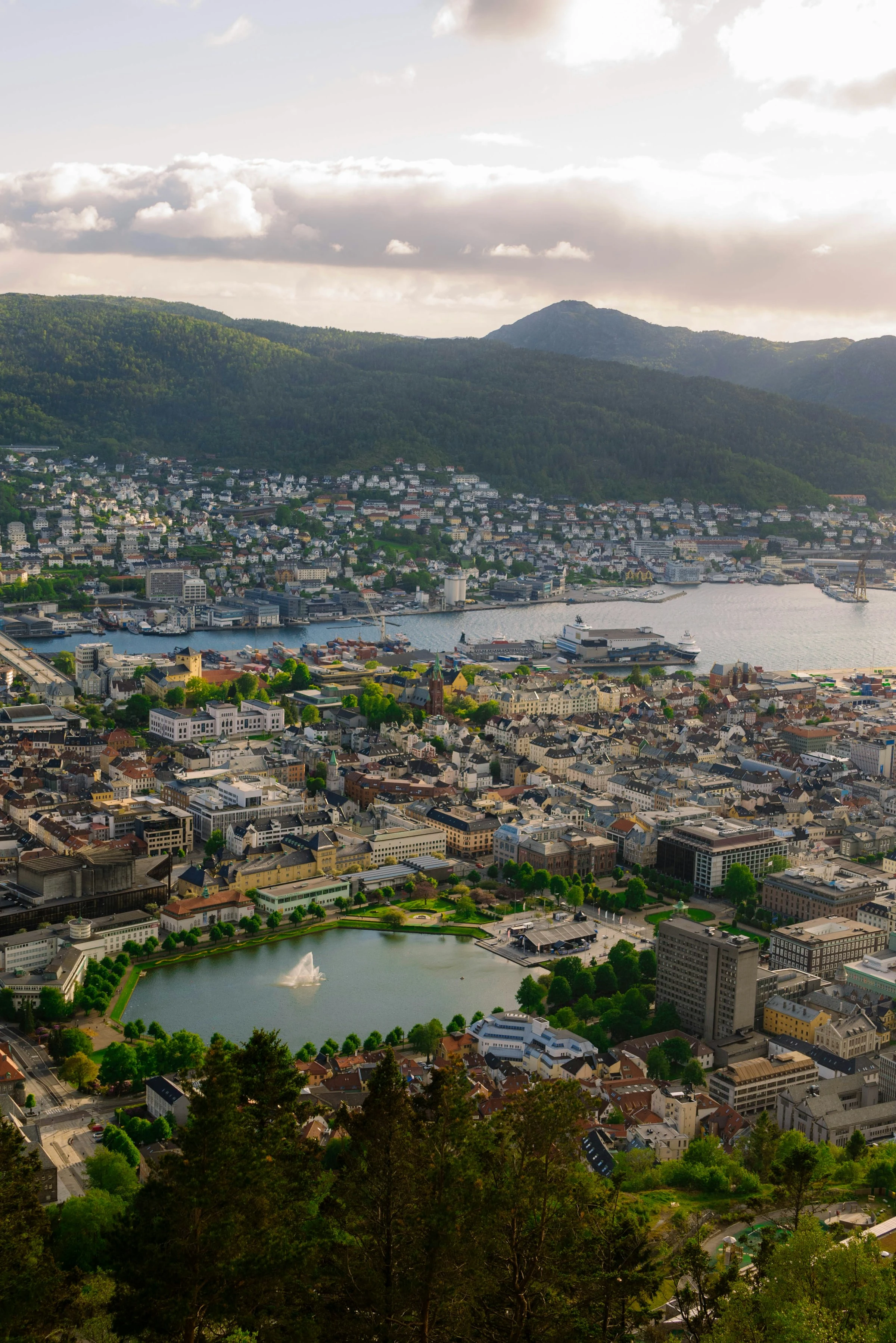
Bergen Norway colourful wooden houses Bryggen waterfront

Bergen — a far stronger base than a two-day stop

Three Better Frameworks
for Ten Days

Below are three structures — not prescriptive day-by-day itineraries, but frameworks for different types of travellers. Each uses ten days differently. None of them follows the standard loop. Each is built around a specific kind of person and a specific kind of trip.

01
For couples & solo travellers seeking immersion
The Fjord Depth Trip

Skip Oslo entirely or treat it as a single half-day layover. Fly directly into Bergen. Spend the first three nights based in a village on Hardangerfjord — Ulvik, Eidfjord, or Lofthus. No crowds, genuine fjord life, excellent hiking directly from the accommodation.

Move north to Sognefjord for three nights — base in Balestrand or Mundal (Fjærland). The Briksdal and Nigard glaciers are day trips. Mundal is one of the most quietly extraordinary villages in Norway, surrounded by fjord and mountain on every side.

Spend the last three nights on the Sunnmøre coast — Geiranger if you want the famous fjord, or Hjørundfjord if you want the same scale without the cruise ships. Both are within range of Bergen for departure.

Bergen Hardangerfjord Sognefjord Mundal Hjørundfjord No Oslo
02
For travellers who want to see Norway change
The Drive North

Fly into Oslo, spend one night. Pick up a car and drive north — not the E6 motorway, the scenic routes. Rondane and Dovrefjell national parks are three to four hours north of Oslo and completely absent from most itineraries. Musk oxen. Vast open mountain plateaus. Almost no other foreign tourists.

Continue to Ålesund — arguably the most architecturally interesting city in Norway, entirely rebuilt in Art Nouveau after a fire in 1904. Most travellers have never heard of it. It is significantly more interesting than a second day in Bergen.

Spend the final days on the Atlantic Road (Atlanterhavsveien) — the bridge road over the Møre coastline that looks like it was designed for a car commercial — then north to Kristiansund or back south to Bergen for departure.

Oslo (1 night) Rondane NP Dovrefjell Ålesund Atlantic Road Bergen out
03
For aurora chasers, winter travellers & serious adventurers
North Norway Focus

Fly directly to Tromsø — direct flights from London, Amsterdam, and most Scandinavian cities. The distance trade-off is paid back immediately by the difference in experience. Two nights in Tromsø to orient, sort gear, and acclimatise.

Move south to Senja island — one of the most dramatic coastlines in Norway, handling far fewer visitors than Lofoten. Three nights. Then east to Lyngen Alps, where peaks rise directly from the fjord and produce some of the most surreal winter scenery in the country.

Return to Tromsø for the final two nights. If the timing is right (November to February), the northern lights are visible on most clear nights from anywhere outside the city. This itinerary has almost zero overlap with the standard loop — and almost every traveller who does it calls it the best trip they've ever taken.

Tromsø Senja Island Lyngen Alps Nov–Feb ideal No Oslo No Bergen

The Four Decisions That
Actually Shape Your Trip

Before building any itinerary, these questions need honest answers. Most people skip them and jump straight to Googling destinations — which is exactly how you end up on the standard loop by default.

Question 01
What do you want to feel?

There's a difference between wanting to see Norway and wanting to feel it. The first produces a checklist trip. The second produces a slower one — fewer locations, more time in each. Neither is wrong, but confusing one for the other produces disappointment.

Question 02
What is your driving tolerance?

Norway's scenery is largely inaccessible without a car. If you're comfortable driving, you can reach places nobody else is. If not — or if you want to drink wine at dinner — base yourself in one or two locations and use local transport. Don't build a driving itinerary and then resent the driving.

Question 03
What time of year are you going?

The same Norwegian route in June (midnight sun, green, roads open) and January (four hours of pale light, snow, mountain roads potentially closed) are completely different experiences. Neither is better — but pretending they're interchangeable produces badly planned trips.

Question 04
How many times are you going?

If this is a once-in-a-decade trip, that's one framework. If you might return, it changes what you optimise for. Trying to see everything in one trip is a recipe for seeing nothing properly. Sometimes the better move is to go deep in one region and leave the rest for next time.

The One Thing Worth Keeping
from the Standard Loop

Not everything about the standard circuit is wrong. One part of it genuinely earns its reputation and is difficult to replicate elsewhere.

🚢
Worth keeping

Nærøyfjord. UNESCO listed, the narrowest fjord in Europe, and an experience that is genuinely hard to replicate elsewhere. The boat journey through it is worth doing — just not worth building your entire trip around. Everything else on the standard loop is negotiable.

Norway is large enough and varied enough that ten days barely scratches the surface of what's available. The travellers who come back from Norway feeling like they saw something real are almost never the ones who followed the standard loop. They're the ones who made a specific choice about what kind of trip they wanted — and then built everything else around that.

Talk to a human

Building a 10-day Norway trip and not sure which framework fits you?

Describe your travel style, dates, and what matters most — and we'll connect you with a specialist who can map something around you. No packages, no pressure, no fees.

Tell us about your trip →